The uncomfortable truth about the “Autism Crisis”

Autistic individuals have a suicide attempt rate 2-8 times higher than the general population, and are 3 to 5 times more likely to die by suicide.
Autistic people have the lowest employment rates of any disabled group, with only 30% of autistic people in employment currently.
The question is:
Why?
I’ve been diving into the data from the University of Cambridge study released yesterday.
It’s the kind of research that makes your stomach turn.
I’m about to share why the “mental health crisis” in the neurodivergent community isn’t what they’re telling you it is.
This is the knowledge the system ignores because once you see it, you realise the “disorder” isn’t in the brain at all.
The Findings:
Experts found that the 3–5 times higher risk of suicide in the autistic community is largely rooted in lifelong inequalities, ranging from education and employment to healthcare gaps.
The only solution:
Researchers are urging governments to move away from treating autism as an individual “mental illness” issue and instead focus on systemic societal changes and a properly resourced Autism Strategy.
As it turns out, the only disorder is actually how the world treats us.
THE MYTH OF THE “DEFECTIVE” BRAIN
Think of the brain like a high-performance computer.
The Neurotypical world is running Mac OS. The Autistic brain is running Kali Linux.
To an average person, Linux is crap. But that’s because they’re average and can’t figure it out. They need to use the same simplified commercial crap their friends use, not what’s actually better.
A Linux machine isn’t inferior to Mac OS or Windows. In fact it’s far superior at a lot of very important things. Specifically purpose built machines. Why do you think every important machine on earth is actually running Linux?
Being autistic is being forced to run Windows software on Linux with no emulator. You have to code the emulator yourself on the fly.
It wasn’t designed for this crap.
You were meant for more.
They want you to believe you fail because we are “disordered.” We fail when the environment is neurologically hostile.
SURVIVING THE “NORMAL” WORLD
Most people see a traffic stop as an inconvenience. For an autistic person, it’s a high-stakes Pattern Interruption that can turn fatal.
Connor Tomlinson (star of Love on the Spectrum) just testified in Georgia for special license plates to prevent more “Misunderstandings.”
The Police expect Eye contact, immediate compliance, and “normal” physical cues.
The Autistic response is Sensory overload, shutdowns, stimming and nervous or literal speech.
When the police misread a neurological response as “resistance,” the results are tragic.
Connor is just asking for a Safety Feature in a world that interprets our existence as a threat.
THE IRISH PROTOCOL: FUCK THE DELAY
Ireland is a world leader in DEI and neurodiversity awareness, yet here I am, writing an angry blog from Ireland about how bad things are for us.
A major issue in our state is the wait times for proper mental health services. People off themselves waiting for years to be seen.
In the meantime, the country has an epidemic of shady unregulated psychotherapists who did a 2 month course and charge €50-€100 per hour to make your life worse.
I’m one of the few who found a real one who knows what he’s doing. It took seeing 10 assclown therapists to get to him.
Last month (February 2026), Ireland launched the Autism Assessment and Intervention Protocol.
For years, the bureaucracy followed the same rule: Make them wait. Keep the gates narrow. That’s just how we do things here.
They were reinforcing the Failure Pathway. The longer a child waits for an assessment, the more Neurological Anchoring occurs around trauma, isolation, and “not belonging.”
Ireland is finally trying to Interrupt the suicide pipeline. Standardizing and speeding up the process of getting an Autism Diagnosis and access to support services.
Good stuff.
THE REWIRING: A RADICAL SHIFT
The Cambridge study calls for a radical shift.
We don’t need more “social skills” training to help be more effective dancing monkeys. We need to stand our ground.
How we break the conditioning:
Stop Fixing People, Fix Environments: If a plant is dying you fix the soil, not mindfuck the plant.
We start by changing what we can right now. We make our homes, our trips, our choice of friends, our work stations, and our routines as accommodating for the nervous system as possible, then go from there. From a position of energised strength.
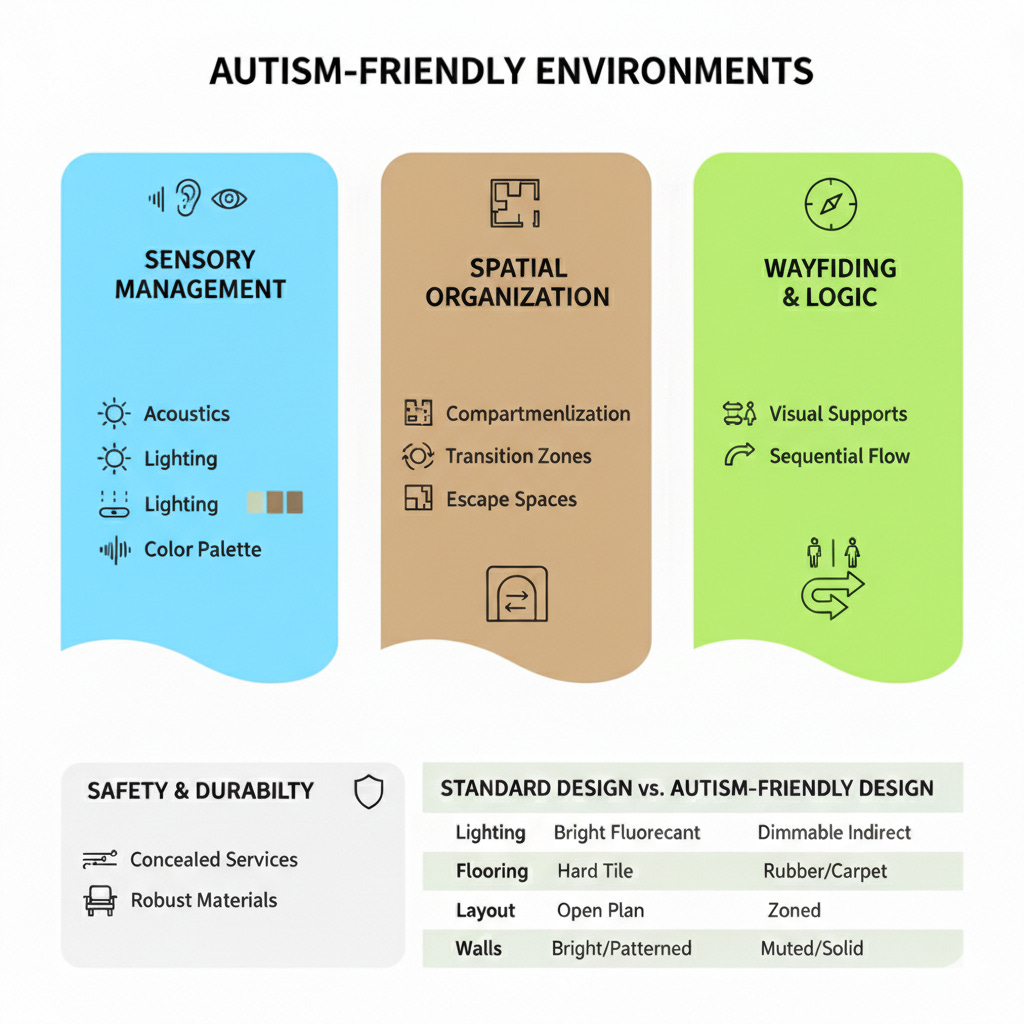
Neurological Legitimacy: Accept that different processing speeds and sensory needs are valid.
End the stigmatising division: Stop punishing atypical but harmless behaviour in schools and workplaces.
Look, I’m a believer that sometimes bullying can serve a societal function, but only up to a certain point and with certain people doing some types of annoying things.
There’s a thin line where it becomes abuse and that line is thinner when autistics are involved.
Bullying them into acting normal only kicks an extremely volatile can down the road.
I won’t expand on this.
With that said, too far in the opposite direction is just as bad. I personally disdain overcoddled fellow autistics with Golden Child Syndrome.
Caring for an autistic child means being aware of their sensory experience, literal interpretations, and reverse-engineer style of reasoning as opposed to understanding via vibes.
It means giving them leeway for saying insensitive or repetitive things and explaining logically and helpfully why that’s bad for them.
It means having an agreed plan in place for meltdowns.
It does not mean shielding them from accountability for their destructive actions.
I’ve met a few of these former Golden Child types. No accountability. No empathy. No awareness. Selfish. Annoying. The worst adults I ever met.
Traits not caused by autism. Caused by parents having every excuse ready whenever their perfect angel hit someone.
I wondered if they were not really autistic but actual psychopaths. Maybe they were both idk. I wouldn’t risk raising my kids wrong just in case they go this way.
So how much discipline and pressure is the right amount?
It’s a nasty catch 22 for parents and teachers looking for answers.
Just try to learn about what it means to be autistic from autistic people, be kind and understanding, and don’t infantilise or treat us like retards please.
That’s just lazy and gay.
THE UNCOMFORTABLE TRUTH
Most “autistic struggles” are just accumulated trauma from living in a world that wasn’t built for you.
The anxiety is a rational response to a sensory-aggressive world.
The depression is a response to the being treated like a freak for not liking how shit everything is.
This is both terrifying and empowering.
Terrifying that world is designed to drain you.
Empowering in that we can and have been changing the environment.
The normie faggots think autistic struggles are biological laws and it’s just a terrible tragedy we have to live with.
The Cambridge study proves they aren’t.
Your life proves it’s not you that’s the problem.
But you already knew this.
We don’t need to be “cured.” We need to be accommodated.
Do you still feel like you’re running the wrong software, or is it finally starting to make sense?
Further Reading
https://www.cam.ac.uk/research/news/improve-education-and-transitional-support-for-autistic-people-to-prevent-death-by-suicide-say
https://www.yahoo.com/news/articles/lawmakers-special-license-plates-early-090043233.html?
https://www2.hse.ie/conditions/autism/assessment-and-support/assessment-autism/
https://www.oireachtas.ie/en/debates/question/2026-01-20/825/
Comments